 U.S. researchers who tested whether beet juice improves muscle blood flow and athletic performance found that the widely held belief does not hold up under scientific scrutiny. The researchers gave participants either a placebo drink containing beetroot juice without nitrates or a relatively high dose of nitrate-rich beetroot juice. The latter did not enhance the natural rise in blood flow to the forearm muscles during handgrip exercises, and had no effect on the dilation of brachial arteries. Nitrate-rich beetroot juice does, however, "de-stiffen" blood vessels under resting conditions, potentially easing the workload of the heart. "Acute dietary nitrate supplementation does not augment submaximal forearm exercise hyperemia in healthy young men", Applied Physiology, Nutrition, and Metabolism, January 19, 2015 |  Sales of the healthy meal-in-a-pouch concoction known as Soylent have been impressive enough that the company has been able to raise $20 million from venture capitalists, including Andreessen Horowitz. The new funding puts Soylent’s valuation somewhere between $100 million to $150 million. According to CEO Rob Rhinehart, Soylent has sold three million meals – one million daily powder pouches – through 2014. That puts Soylent squarely in the black. The new funding should allow the company to streamline its supply chain and operations, which have had a hard time keeping up with demand, Rhinehart says. "Soylent Scores $20 Million From Andreessen Horowitz For Its Drinkable Meals", Forbes, January 14, 2015 |
 The enterprising fellow who tried to build a Web-based grocery delivery business 15 years ago – and went bankrupt after burning through $800 million – still believes the idea has merit. So does a new generation of entrepreneurs who see a great opportunity. Defunct Webvan’s George Shaheen says “somebody will figure out” the right way to do it, because no one really likes to shop for groceries. Among the companies trying to prove him right are Instacart, which has raised hundreds of millions in venture capital while racking up $100 million in sales in 2014. It has yet to turn a profit, however, and that may be a major hurdle. Profit margins are notoriously slim in the grocery business. But that is not deterring Instacart or its... More "Rebuilding History’s Biggest Dot-Com Bust", The Wall Street Journal, January 12, 2015 |
|
| Companies, Organizations |  | |
Unilever said underlying sales grew 2.9 percent in 2014, compared with the previous year, with volume rising 1.0 percent and price expanding 1.9 percent. However, turnover decreased 2.7 percent to €48.4 billion, which included a negative currency impact of 4.6 percent. Core operating margin rose 40bps, at current exchange rates, while free cash flow reached €3.1 billion after €0.8 billion of tax on disposal profits. Also, core earnings per share rose 11 percent at constant exchange rates, or 2 percent at current exchange rates to €1.61. "2014 Full Year and Fourth Quarter Results", Unilever, January 20, 2015
Consumer spending on retail and restaurants declined a seasonally adjusted 0.9 percent in December 2014 from the previous month, according to the U.S. Department of Commerce. For most of 2014, consumer spending rose steadily, supported by steady job growth and relatively strong confidence. Also, the drop in consumer spending highlighted the limits that cheaper gasoline has in terms of driving spending growth and the overall economy. Moreover, lower fuel prices contributed to the spending decline. Retail sales grew 4 percent in November and December 2014, compared with the same period in 2013, according to National Retail Federation. "U.S. Retail Sales Reflect Consumer Caution Despite Lower Gas Prices", The Wall Street Journal, January 14, 2015
Instacart, a newly established company seeking to provide grocery delivery services, said it has raised $220 million in January 2015. In June 2014, the company raised $44 million. Using a pool of personal shoppers, who are independent contractors, to buy and deliver goods to customers, Instacart said its business strategy focuses on grocery and creating partnerships with retailers. Instacart's purchase and delivery process involves receiving orders placed by customers, which are filled at local stores by personal shoppers. "Instacart Bags $220 Million", E-Commerce Times, January 14, 2015 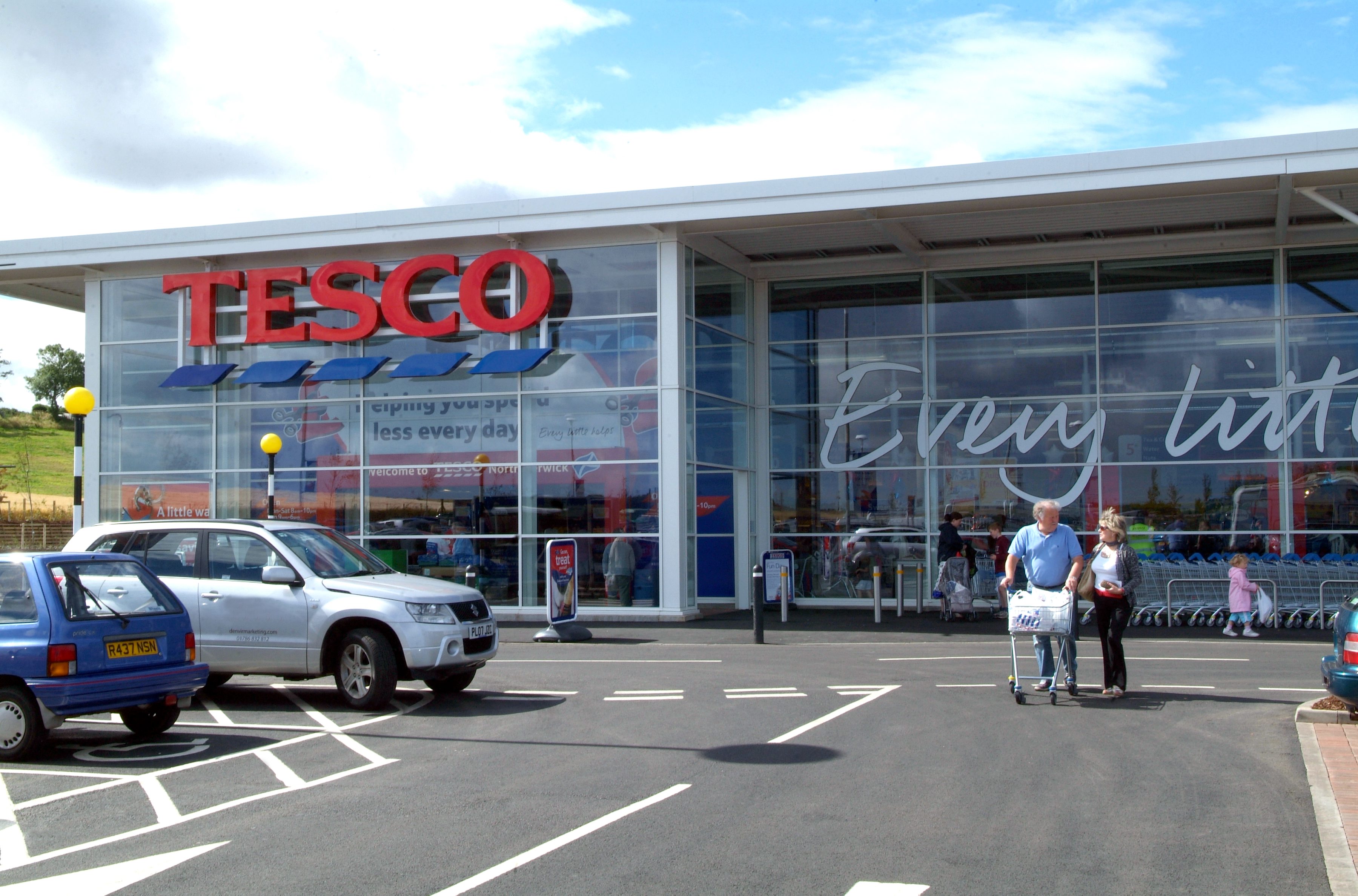 British supermarket chains hoped Christmas sales would dispel the gloom of 2014. Unfortunately, there was no overall upward trend. Some, like Waitrose, saw improvements over the same period a year ago. Some, like Sainsbury’s, saw declines. All of the chains had to deal with stiff competition from discounters Aldi and Lidl, as well as dropping food prices. But there is reason for optimism. The economic environment is steadily improving: fuel prices are dropping and real wages are rising. A strong Internet presence and online shopping advances are bearing fruit for companies. And chains like Tesco are benefiting from decentralizing store management, giving managers a greater say in adjusting inventory to meet the needs of local... More"Supermarkets: Learning to be different", The Economist, January 10, 2015 | Unilever, January 20, 2015 Seeking Alpha, January 20, 2015 The Telegraph, January 18, 2015 Nielsen, January 16, 2015 The Wall Street Journal, January 15, 2015 Kellogg's, January 15, 2015 BBC News, January 15, 2015 City Metric, January 14, 2015 Packaging Digest, January 14, 2015 Australian Food News, January 12, 2015 This Day Live, January 10, 2015 Packaging World, January 09, 2015 |
|
| Market News | | |
A new report from researcher IRI shows that private label products have proven to be the answer for consumers looking to stretch their shopping dollars while finding value. Brand selections continue to be based on affordability: one-third of U.S. shoppers look for and choose private label products to save money. U.S. consumers spent $120 billion on private label products in 2014, an increase of 2.1 percent over 2013. But IRI says consumers are looking for value, not just low prices, so it’s important for retailers to stock national and private label brands offering value and affordability. National brand innovation has been strong in beauty products, while private label is strong in the mass/super channel. "Private Label & National Brands: Dialing in on Core Shoppers", Report, IRI, January 20, 2015
The owner of the U.K.’s Whitworth Sugar brand has acquired Rainbow Dust Colors, a cake decoration supplies firm, for £7.5 million. Real Good Food will pay an initial £4 million, and will receive another £3.5 million in cash in an earn-out arrangement based on a year’s gross margin. Cake decoration is a burgeoning global phenomenon. Rainbow Dust supplies colored edible glitters, dusts, sprinkles and food paints to the sugarcraft industry. Rainbow Dust employs 28 and operates a factory in Lancashire. "Whitworths owner Real Good Food snaps up Rainbow Dust for £7.5m", The Grocer, January 20, 2015 | Food Ingredients 1st, January 20, 2015 The Star, January 20, 2015 Telegraph, January 20, 2015 Bloomberg, January 20, 2015 Canadean, January 19, 2015 FoodBev.com, January 19, 2015 Nutraceuticals World, January 16, 2015 |
|
| Marketing & Advertising | | |
Unilever is reportedly planning to review its global media buying and planning business. The packaged goods company conducted its last review in 2012, something it tends to do every three years. According to sources familiar with the planned review, Unilever has invited the incumbent agencies to participate. In 2014, Unilever said it spent $8.3 billion in global advertising, including about $1.4 billion in agency and production fees. "Unilever to Review Massive Media Buying and Planning Account", Advertising Age, January 22, 2015
Unilever said weak performance in emerging markets adversely affected fourth quarter sales, which were lower than expected by analysts. Underlying sales rose 2.1 percent, though analysts were expecting a 2.6 percent increase. Unilever’s decision to destock its products from Chinese store shelves as a reaction to the slower economy there led to a 20 percent slide in sales. Full year sales growth also came in slightly below expectations at 2.9 percent. The company blamed problems in emerging markets – 60 percent of Unilever’s sales – for the tepid financial performance. Besides the slower Chinese economy, problems included weakening currencies, sanctions on Russia, and fierce price competition among European retailers. "Unilever claims it has 'good relations' with Tesco despite accounting scandal", Telegraph, January 20, 2015 | mydigitalfc.com, January 22, 2015 indiantelevision.com, January 21, 2015 Business Standard, January 21, 2015 Indian Television, January 21, 2015 CPG Matters, January 16, 2015 Business 2 Community, January 13, 2015 Food Safety News, January 08, 2015 |
|
|