 British researchers found significant discrepancies between lists of vitamin D-fortified foods and vitamin D data gathered from industry Web sites, trade associations and manufacturers and government vitamin D databanks. They compared 289 foods fortified with vitamin D catalogued by the UK National Diet and Nutrition Survey (NDNS) Nutrient Databank in 2008 and 2010 to the data they compiled. They concluded that the U.K. should update vitamin D food and supplement content estimations because they underestimate population intake levels of the vitamin by about three percent.
"More vitamin D in UK foods than previously: Study", Food&DrinkEurope.com;, August 26, 2014
|
 A multiyear licensing, manufacturing and distribution deal under which Kraft Foods will supply Maxwell House, Yuban and McCafe coffee brands for Keurig’s home brewing system sent Keurig shares to record highs on August 21. Keurig stock, which jumped 13 percent to $133.36 after the announcement, has risen 77 percent this year. Kraft will provide coffees in various portion pack sizes, including K-Cup packs that make a single cup of coffee. Keurig is also working with Coca-Cola Co., which owns 16 percent of the Vermont-based company, on a system for producing cold beverages.
"Keurig Soars After Deal to Bring Kraft Coffees to Machines", Bloomberg Businessweek, August 22, 2014
|
 A Russian food monitoring agency that has a history of banning food from countries out of favor with the government has closed four McDonald’s restaurants in Moscow because of “sanitary violations”. In the past, the agency has prohibited wine from Georgia and dairy products from Belarus after they sought closer relations with western nations. Recently the agency outlawed canned vegetables, fruit, fish, juice and certain beer and vodka from Ukraine. McDonald's said it was trying to figure out what it needs to do to get the restaurants re-opened “as soon as possible".
"Russia closes McDonald's restaurants for 'sanitary violations'", The Guardian, August 20, 2014
|
 A trade association that represents diet supplement companies has developed a Web-based tool that members can use to avoid running afoul of FTC rules on weight loss and other spurious ad claims. Bogus claims made by weight loss supplement makers generate the highest settlement costs in the dietary supplement and functional food category, according to the Council for Responsible Nutrition, which developed the quarterly-updated online tool. Members can use the tool to view all available FTC advertising enforcement actions related to dietary supplements and functional foods since 2003. Bogus weight loss claims generated the highest settlement costs at $438.4 million, followed by immunity claims ($47.2 million) and impermissible cancer... More
"Weight Loss Supplement Claims Provide FTC with Steady Diet of Enforcement Initiatives, New CRN Analysis Shows", News release, Council for Responsible Nutrition, August 19, 2014
|
 Building on the success of McCafé coffee in its restaurants, and hoping to boost sales, McDonald's has partnered with Kraft Foods to offer McCafé premium bagged coffee at retail grocery, mass merchandise, club and drug stores in the U.S. beginning next year The roll-out follows successful testing in the U.S. and Canada in 2013. A McDonald’s spokesman said the decision to market bagged coffee was “a natural next step”, considering that more than 70 percent of coffee in the U.S. is consumed at home. Products to be offered will include ground, whole bean and single-serve coffee in varieties like premium roast, breakfast blend, French roast, Colombian, etc.
"Kraft, McDonald's to Roll Out Bagged McCafe Coffee Nationally", Advertising Age, August 19, 2014
|
 Kids already eat half of the Actimel yogurt drink bought by British families, so Danone has decided to target children with a range of kid-friendly products. Newly-designed 100-gram bottles will feature three Actimel "heroes": AC, TI and MEL. The drinks will be available in strawberry, raspberry and vanilla flavors, and contain healthful ingredients calcium, vitamins and L. casei live cultures. The product launch is backed by a multi-million pound ad campaign that includes TV for parents and kids, sponsorship and PR, as well as in-store activation, the company said.
"Danone launches Actimel for kids", The Food & Drink Innovation Network, August 19, 2014
|
 Royaan of The Netherlands has put an innovative crumb coating technology to work in a line of new oven snack products. Crisp Sensation Holdings’ technology provides superior oven-baked crumb coatings that rival deep-fry coatings. The process assures that no breaking or leaking of the contents occurs during cooking. Once reheated, products remain crispy and juicy for up to three hours in regular holding units. Royaan’s new Kwekkeboom oven snacks range from meat croquettes to cheese dippers.
"Coating Technology Enables Truly Crispy Oven Snacks", Asia Food Journal, August 19, 2014
|
 Food safety officials in China’s Zhejiang province found “excessive amounts of lead” in 1,472 boxes of U.S. food maker H.J. Heinz’s AD Calcium Hi-Protein Cereal for babies, prompting a recall. The company, which issued an apology to customers, said it would recall four batches of the cereal as a precautionary measure. Safety officials urged Heinz to compensate customers who had purchased the tainted cereal.
"Heinz recalls four batches of infant food in China", Reuters, August 19, 2014
|
 A small company has developed a drinking cup packed with sophisticated sensors that can detect the level of certain nutrients in beverages, and then report the calorie content. Vessyl, designed to be used at home or work, displays the type of beverage poured into the cup (i.e., coffee, beer, etc.), the calorie count, and other details, like protein and sugar content. The idea, according to Mark One CEO Justin Lee, is to keep you aware of what you’re ingesting. "If you track what you consume, the likelihood of you achieving your health goal is much higher." A promotional version of Vessyl is available at $99 until next year, when the price will more than double.
"This Cup Tells You How Many Calories You're Drinking", Fast Company, August 19, 2014
|
 Food shoppers in China and Hong Kong are paying closer attention to nutrition, sustainability, safety and – logically enough – country of origin, a fact that is driving demand for better quality food products. That’s good news for California food exporters, who are perceived by the Chinese as high quality producers. California has exported about $4 billion worth of food products – fresh produce, health foods, organic foods and premium wines – to Hong Kong and China so far in 2014, a nearly 20 percent increase over 2012. Forecasters see a similar double-digit increase by the end of the year.
"Hong Kong, China Food Imports from California to Exceed $4B amid Mounting Food Scares", Asia Food Journal, August 18, 2014
|
 Whether or not they represent the vanguard of a foodie trend is impossible to say, but a couple in central Washington State is devoted to raising and selling an ancient variety of wheat known as emmer. And the products of Bluebird Grain Farms have found a market among regional chefs who used to import emmer from Italy. The couple not only cultivates emmer, they store and mill the grain to make sure of its integrity from “plow to plate”. Sam and Brooke Lucy sell to chefs, but also peddle finished emmer-based baked products online: cereal, pancake and waffle mixes, and flour for baking cookies, muffins, breads and wide-noodle pasta.
"Ancient waves of grain", Capital Press, August 15, 2014
|
 Shake Shack, which bills itself as a modern-day “roadside burger” restaurant chain, is planning an initial public stock offering, according to news reports. The company evolved from a New York City hot dog cart and kiosk facility to the current incarnation serving burgers, hot dogs, frozen custard, shakes, beer and wine to customers in four states, the District of Columbia and Turkey. Majority owner Union Square Hospitality Group LLC has been interviewing banks to appoint as underwriters for the IPO, Fortune magazine reports.
"Shake Shack is reportedly planning an IPO", Fortune, August 15, 2014
|
 Sales of breakfast cereals continue to tumble. Overall, between 2009 and 2010, cereal sales dropped a “nauseating” – AdWeek’s term – 6.3 percent, according to Mintel. Kellogg reported recently that sales of its cereal products fell 4.9 percent, contributing to a 15 percent slide in profit. AdWeek cites several market factors at work in these disturbing numbers. The number one reason is the perception that cereals are too loaded with sugar, contributing to the childhood obesity epidemic. Other factors: concerns about gluten sensitivity, increasing competition from highly portable snack bars and yogurt, and the fact that more and more people just skip breakfast altogether.
"Why Don't Americans Like Breakfast Cereal Anymore?", AdWeek, August 14, 2014
|
 The South Korean FDA has approved the vaginal health claim of Chr. Hansen’s Urex probiotic dietary supplement. The approval means Hansen customers in the country can make the claim on product packaging and in promotional material that “Urex can help vaginal health by increasing lactic acid bacteria”. Urex contains Chr. Hansen's Probio-Tec strains RC-14 and GR-1. The company says it is spending significant resources on securing official validation of the scientific documentation behind its probiotics. The Korean FDA’s recognition of the health benefits of RC-14 and GR-1 “works as motivational tailwind in this process”, according to a company spokesman.
"Chr. Hansen gets probiotic health claim in Korea", News release, Chr. Hansen, August 14, 2014
|
 America’s growing love affair with nutrient-rich “superfoods” is apparently grounded in the belief – held by 75 percent of consumers – that health can be managed through nutrition. Marketers of such foods rely heavily on the well-reported findings of scientific and medical researchers. But which foods are superfoods? Nielsen compiled a list of 41 “powerhouse fruits and vegetables” that contain at least 10 percent daily value of 17 nutrients per 100 calories. On the list: kale, iceberg lettuce, tomatoes, strawberries, oranges, carrots, watercress, Chinese cabbage, chard, beet greens, and spinach. Excluded were raspberries, tangerines, cranberries, garlic, onions, blueberries, pomegranate, quinoa, and wheat berry.
"The Church of Superfoods Gains More Believers", Bloomberg Businessweek, August 13, 2014
|
 A brand of ice cream once known only to customers within a 100-mile radius of a tiny New York town has gained a global reputation – and market – thanks to an innovation in its product line and a federal government initiative to boost exports. Sixty-year-old Mercer’s Dairy ships its wine-infused ice cream to 14 countries, and plans to expand to four continents. Barack Obama’s promise to double exports by 2015 led to the creation of the National Export Initiative to help businesses sell abroad. U.S. exports rose in 2013 to a fourth-straight record of $2.28 trillion. Despite the availability of technical advice, however, many small businesses remain skeptical of exporting. But not Mercer’s, where exports now account for about $250,000... More
"Wine-Infused Ice Cream Boosts U.S. Small Company Exports", Bloomberg, August 12, 2014
|
|
| Companies, Organizations |
 |
|
A winery and bakery in north central Washington State have joined forces to provide a special tasting experience that blends good local wines and artisanal Italian-style breads. Snowgrass Winery produces merlot, cabernet-merlot, Sangiovese and syrah wines. Artisan Bread Co. of Wenatchee, Wash., supplies a dozen types of bread, all of Italian heritage, including bruschetta, a peppery Indian-style naan flatbread, a caraway rye, Broa corn and wheat bread, arugula and black olive flatbread, and a breakfast fruit and spice bread. Also available at the winery, along with various sheep’s milk cheeses, are a red hot ciabatta (made with peppers) and a Roman wheel bread that can be stuffed with other ingredients.
"Bread and Wine: An historic match", The Wenatchee World (Washington), August 22, 2014
The Hain Celestial Group, Inc. said net sales rose 24 percent for its fiscal year 2014, while operating free cash flow tripled to $143 million for the 12-month period ending June 30, 2014. For the fourth quarter of FY 2014, net sales increased 26 percent to $583.8 million, while GAAP earnings per diluted share from continuing operations rose 32 percent to $0.70. Adjusted earnings per diluted share from continuing operations increased 39 percent to $0.90. Adjusted operating income was $73.9 million, or 12.7 percent of net sales during the period.
"Hain Celestial Announces Highest Quarterly And Fiscal Year Net Sales In The Company's History", Hain Celestial, August 20, 2014
Sales of skin lightening products globally will reach $20 billion by 2018, according to a Spanish ingredients supplier, but the market focus may shift away from topical products that “often cause localized discolored skin patches” to dietary supplements. The supplier, Monteloeder, hopes that’s the case anyway because it is marketing a plant-based “nutri-cosmetic” orally-ingested ingredient for beauty companies that treats skin pigmentation disorders safely and effectively. The company says a study in Spain showed that Melagenol inhibits melanin production in melanocytes, preventing the appearance of unattractive dark spots on the skin.
"Monteloeder: “Lighter Skin From Within” is the Future", Nutrition Insights, August 19, 2014
|
National Public Radio, August 26, 2014
Business Standard, August 26, 2014
Euromonitor International, August 26, 2014
Media Post, August 21, 2014
The Wall Street Journal, August 21, 2014
Food Business News, August 20, 2014
|
|
| Legal, Legislation, Regulation, Policy |
|
|
The World Health Organization is working to upgrade the nutritional intake of people around the globe by enhancing the nutritional value of certain popular condiments. The program is modeled after successful nutrient-enhancing initiatives such as adding iodine to common table salt. The WHO hopes to enrich foods – soy sauce, for example, in Southeast Asia – with iron, vitamin A and other micronutrients. Deficiencies are a serious problem in the Philippines, Thailand, Malaysia, Vietnam, Indonesia, West Africa and Central America. The success of the nutrient enhancement program depends to a great extent on a supportive legal framework in individual countries, the researchers say.
"Fortification of Condiments and Seasonings with Vitamins and Minerals in Public Health: From Proof of Concept to Scaling Up", News release, study to be published in the Annals of the New York Academy of Science, August 28, 2014
Food manufacturers have launched an effort to give the Food and Drug Administration access to a large database of safety information on chemicals commonly used in food processing. Consumer advocates have long pressed the FDA to make food ingredients more transparent. Currently, food chemicals are checked for safety by the manufacturers, who rely on publicly available scientific data and on panels of industry-subsidized experts. Both the FDA and critics of the food industry welcome the initiative of the Grocery Manufacturers Association.
"Big Food to divulge chemical info", Politico, August 27, 2014
|
The Wall Street Journal, August 27, 2014
Food Safety News, August 26, 2014
Business Wire, August 20, 2014
The Guardian, August 20, 2014
|
|
| Market News |
|
|
Consumer interest in buying foods that contain no genetically modified organisms (GMO) is not flagging. Sales of verified non-GMO foods soared 80 percent last year, and the movement continues to accelerate, thanks to state GMO labeling victories, retailer-initiated labeling requirements and growing consumer demand for GMO transparency. According to the Center for Food Safety, more than 60 bills have been introduced in 20 states requiring GMO labeling or prohibiting genetically engineered foods. Voters in Oregon and Colorado will vote on GMO labeling bills in the fall, a sure sign that non-GMO awareness gaining a foothold.
"Non-GMO food sales growing, according to new NBJ research (infographic)", NewHope360.com, August 19, 2014
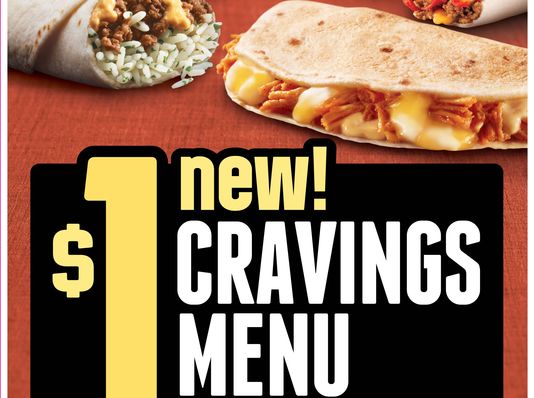 Mexican food chain Taco Bell has launched a dollar menu, following in the footsteps of competitors McDonald’s and Wendy’s. The “Dollar Cravings” menu will feature 11 items – including spicy tostadas, triple layer nachos, shredded chicken quesadillas, cinnamon twists and caramel apple empanadas – selected to appeal to millennials, who account for half the chain’s transactions. The company recently opened fast-casual taco restaurant, U.S. Taco Co., in California to compete with Chipotle.
"Taco Bell is latest chain to offer a dollar menu", Los Angeles Times, August 18, 2014
For years there has been a “disconnect” between what consumers think of as “natural” foods and what food manufacturers provide, perhaps because there’s no official definition. The disconnect has led to confusion and litigation – more than 200 lawsuits have been filed in recent years. So, industry experts say, manufacturers are turning away from natural, using instead words such as "simply" and "pure" to suggest the idea that a product contains no artificial or synthetic ingredients. Pillsbury, for example, has "Simply ... Cookies" and Frito-Lay has "Simply Cheetos Puffs". Meanwhile, consumers are being advised to remember that natural should not be confused with healthful. "Natural" potato chips may not have been bleached, but they... More
"Food buyers lean toward 'natural,' a claim that's hard to define", Los Angeles Times, August 15, 2014
|
The Wall Street Journal, August 28, 2014
THE NATION , August 28, 2014
The Bangor Daily News, August 26, 2014
BakeryAndSnacks.com, August 26, 2014
National Public Radio, August 26, 2014
|
|
| Marketing & Advertising |
|
|
Burger King launched its mobile coupon app in the United States. To promote the digital coupon application and encourage consumers to download the app, the fast food chain is offering a free Android smartphone. Customers can avail themselves of the free Android handset, available from leading wireless operators by keying in the code FREEPHONE at the checkout counter.
"Burger King ups ante on promoting apps with smartphone offer", Mobile Commerce Daily, August 26, 2014
|
The Wall Street Journal, August 28, 2014
|
|
| Other |
|
|
Britain’s Food Standards Agency admitted it goofed when it recently cleared one of the country’s biggest chicken processors of charges of lapses in hygiene. Workers at the processing plant had claimed that chickens dropped on the floor had been returned to the production line, a clear “breach of the legislation” the FSA has now acknowledged. A report by the newspaper Guardian was followed by an FSA inspection that found no problems at the Scunthorpe abattoir. In reversing the favorable ruling, the agency issued no penalties because Scunthorpe, which supplies chicken to leading U.K. retail chains, promised that the problems have been patched up.
"UK food watchdog admits chicken factory breached hygiene laws", The Guardian, August 12, 2014
|
National Public Radio, August 22, 2014
Associated Press, August 22, 2014
Fast Company, August 22, 2014
Bloomberg, August 18, 2014
|
|
| Products & Brands |
|
|
A business that began online and expanded to farmers markets has now opened a store in Eastern Oregon selling fresh-baked pet treats for dogs as well as gourmet cupcakes for humans. Pendleton Pupcakes combines a pet treat bakery, custom pet accessory maker and relaxation station with couches for humans and small beds of pets. The store hopes to capitalize on the fact that natural, homemade foods and accessories are limited in the Columbia River Basin.
"Pet hangout, bakery opens in downtown Pendleton", East Oregonian (Pendleton, Oregon), August 22, 2014
An Austin, Texas, neuroscientist applies his passion for the chemistry of baking to creating delicious breads using nontraditional and unconventional methods. He uses only fresh-milled organic flours and ingredients to preserve flavor. He minimizes handling to prevent oxidation. He combines long fermentation and wild yeast to produce better tasting and more healthful bread that is easier to digest and has a lower glycemic index. Sandeep Gyawali, who has been consulting and teaching classes on his unusual techniques, is starting a community-supported weekly bread subscription plan offering two breads – a “Miche” boule and a different featured bread – each week.
"Better Eating Through Chemistry", Austin Chronicle, August 15, 2014
|
Euromonitor International, August 25, 2014
Prepared Foods, August 25, 2014
Bloomberg Businessweek, August 25, 2014
The Wall Street Journal, August 22, 2014
Asia Food Journal, August 18, 2014
|
|
| Research, Studies, Advice |
|
|
The neurologist author of “Grain Brain” says most if not all of America’s problems with Alzheimer’s and dementia in general are due to over-consumption of carbs, particularly from grain-based products like bread. David Perlmutter advocates eating more fat, and many fewer carbs (60 to 80 grams a day), basically a return to prehistoric times when people ate a high-fat, low-carb, gluten-free diet. He points to recent studies showing that the risk of dementia is 42 percent lower in people who eat more fat and fewer carbs. The rise in blood sugar caused by eating carbohydrates increases the risk of dementia, so type 2 diabetics are twice as likely to develop Alzheimer’s as the general population.
"Grain Brain May Be Killing Us!", Ivanhoe Newswire, August 25, 2014
U.S. researchers who analyzed the health and diet of 11,000 South Korean adults found that women who ate ramen instant noodles twice a week or more were at higher risk for metabolic syndrome, a set of symptoms that precedes diabetes. No such association was found among men, perhaps because of the effect of sex hormones and metabolism. The reason for the link to metabolic syndrome appears to be the high levels of fat, salt, and calories in the noodles, the researchers said. “The piece to keep in mind is that it's not a healthy product, and it is a processed food."
"Instant Noodles Could Hurt Your Heart", Live Science, August 14, 2014
An Australian clinical trial that tested a proprietary curcumin-based supplement on 56 people diagnosed with major depressive disorder found that it worked better than a placebo on reducing self-reported depressive and anxiety symptoms. BCM-95 Curcumin, developed by DolCas Biotech, LLC, worked even better on people with atypical depression, which is generally more difficult to treat. Curcumin is the main curcuminoid derived from the spice turmeric. DolCas Biotech scientists developed a way to process curcumin – which is highly insoluble – to make it much more bioavailable and therefore therapeutically useful.
"Curcumin for the treatment of major depression: A randomised, double-blind, placebo controlled study", Journal of Affective Disorders, June 11, 2014
|
The New York Times, August 25, 2014
|
|
| Trends |
|
|
One should not conclude from the continuing slide in breakfast cereal sales that American no longer eats breakfast. Market researcher Nielsen says breakfast is more popular than ever. Egg sandwiches, sausages, cereal bars, pastries, etc., are all catching up to breakfast cereals (still an $8.5 billion industry). Key reasons for the trend: less interest in fiber and more interest in protein. Interest in non-GMO foods is up 67 percent in the past five years, while interest in gluten-free foods and foods without corn syrup has soared. What’s left? “The gluten-free, unsweetened, high-protein, non-GMO egg”. General Mills says “significant product innovation” eventually will rescue it from the sales malaise: it is looking closely at... More
"Mikey Doesn't Like It: How Cereal Is Missing the Breakfast Boom", Bloomberg Businessweek, August 20, 2014
|
BakeryAndSnacks.com, August 26, 2014
ETRetail.com, August 26, 2014
NPD Group, August 25, 2014
National Public Radio, August 24, 2014
|
|
|